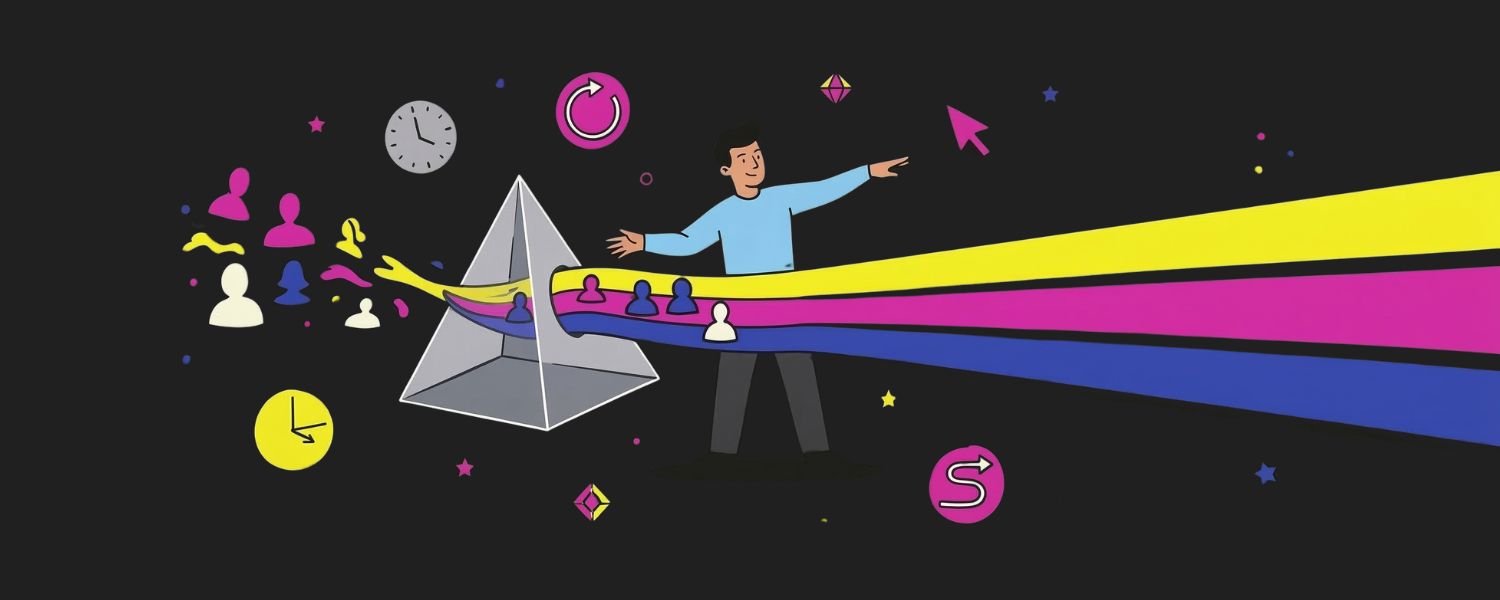
Most DTC brands treat their email list like one audience. Everyone gets the same campaign at the same time — and then the founder wonders why open rates are cratering, unsubscribes are climbing, and email “doesn’t work anymore.” It does work. It works extremely well. But only when you stop talking to everyone the same way.
Segmentation is the single highest-leverage activity in the email channel. Properly segmented programs generate $36–$42 in ROI per dollar spent. Unsegmented batch-and-blast accelerates list fatigue, damages sender reputation, and leaves revenue sitting on the table.
Three Frameworks, One System
Effective email segmentation isn’t one model — it’s three, layered together:
- RFM (Recency, Frequency, Monetary) — Quantifies historical customer value using transaction data. How valuable is this person, and are they becoming more or less valuable over time?
- Behavioral — Captures real-time intent signals: browse activity, cart actions, email clicks, quiz responses. What does this person want right now?
- Lifecycle — Maps each customer’s position in their journey with the brand: prospect, first-time buyer, repeat customer, lapsed. What do they need next?
The critical rule: behavioral signals override everything. A lapsed, low-scoring customer who just added a high-margin product to their cart is a conversion opportunity, not a dormant profile. Treat them accordingly.
The Second Purchase Changes Everything
Securing the second order roughly doubles lifetime retention probability. Yet most brands invest disproportionately in acquisition and almost nothing in the first-to-repeat transition.
This is where segmentation pays for itself. New customers should be isolated from the general list entirely — no promotional broadcasts for 7–14 days post-purchase. Instead, they get a dedicated post-purchase flow: usage guides, care instructions, brand education, and a well-timed bounce-back offer at day 14–21.
Suppression Is Half the Strategy
Knowing when not to email is as important as knowing who to target. At minimum, every program needs these suppression rules active:
- Recent purchasers (7–14 days) — Suppress from all promotional campaigns. Getting a discount email the day after buying erodes trust and spikes refund requests.
- Welcome flow subscribers — Suppress from all broadcasts until the welcome sequence completes.
- VIPs and Champions — Suppress from all discount campaigns. These customers buy at full price. Discounting them destroys margin and trains price sensitivity.
- Active support tickets — Nobody wants a sales pitch while waiting on a customer service resolution.
Match Complexity to List Size
Over-segmentation is real. Twenty micro-segments with identical email templates equals zero value and massive overhead. The right level of complexity depends on where you are:
- Under 10K subscribers — Two segments: engaged vs. unengaged. Welcome flow and cart abandonment. That’s it.
- 10K–30K — Lifecycle stages become essential. Buyer vs. non-buyer split. 4–6 engagement-based segments.
- 30K–50K — RFM scoring becomes worthwhile. Enough volume for meaningful quintile distributions.
- 50K+ — Full behavioral triggers, browse abandonment, replenishment flows, predictive analytics.
Every segment must map to a distinct action. If you can’t define what different email that segment receives, the segment shouldn’t exist.
What Most Brands Get Wrong
- Using open rates for engagement scoring. Apple’s Mail Privacy Protection inflates opens by 20–60%. Anchor all engagement definitions to verified clicks, site visits, and purchases.
- No sunset policy. Profiles with zero engagement for 180+ days actively harm your sender reputation — which drags down inbox placement for everyone on your list. The 180-day guillotine is non-negotiable.
- Treating one-time gift buyers as Champions. A single $500 holiday purchase doesn’t make someone a top-tier customer. Frequency gating (minimum 2 orders for Champion status) prevents this distortion.
Start Here
If your email program has no segmentation today, the first move takes less than a week: create two segments (engaged in last 90 days vs. everyone else), suppress the unengaged from campaigns, build a welcome series, and set up a cart abandonment flow. That foundation alone will improve deliverability, reduce unsubscribes, and capture abandoned revenue immediately.
From there, layer in lifecycle stages by month three, RFM scoring by month six, and behavioral triggers by month nine. Scale the complexity as your list — and your team’s capacity — can support it.
If your email list is growing but your revenue per recipient is flat, the segments are probably the problem.
Want to talk about what segmentation setup makes sense for your brand? Get in touch — I’ll walk through your Klaviyo account and tell you what I’d change.